Puddles forming on your flat roof after every rain are more than an eyesore. Ponding water that lingers beyond 48 hours accelerates membrane deterioration, adds structural load, and creates ideal conditions for leaks. In most cases, the real culprit is not a failed waterproofing membrane but an uneven roof slab with insufficient slope.
Roof leveling corrects that unevenness before waterproofing is applied, ensuring water drains properly and your new membrane performs as intended. Without this step, even premium waterproofing products will degrade faster than expected.
TopGuard waterproofing specialist in Malaysia has been fixing ponding water problems on residential and commercial properties across KL and Selangor for over 10 years. Our integrated approach combines roof leveling with slab waterproofing to deliver a lasting result.
Key Differences of Roof Leveling vs. Waterproofing Only
| Factor | Leveling + Waterproofing | Waterproofing Only |
| Addresses root cause | Yes, corrects slope deficiency | No, covers surface only |
| Lifespan of membrane | Longer, less hydrostatic stress | Shorter, membrane stressed by ponding |
| Recurring leak risk | Low | High if ponding persists |
| Suitable for | Roofs with visible ponding or slope issues | Roofs with intact drainage and minor surface wear |
| Cost over time | Higher upfront, lower long-term | Lower upfront, higher repeat costs |
What Is Roof Leveling?
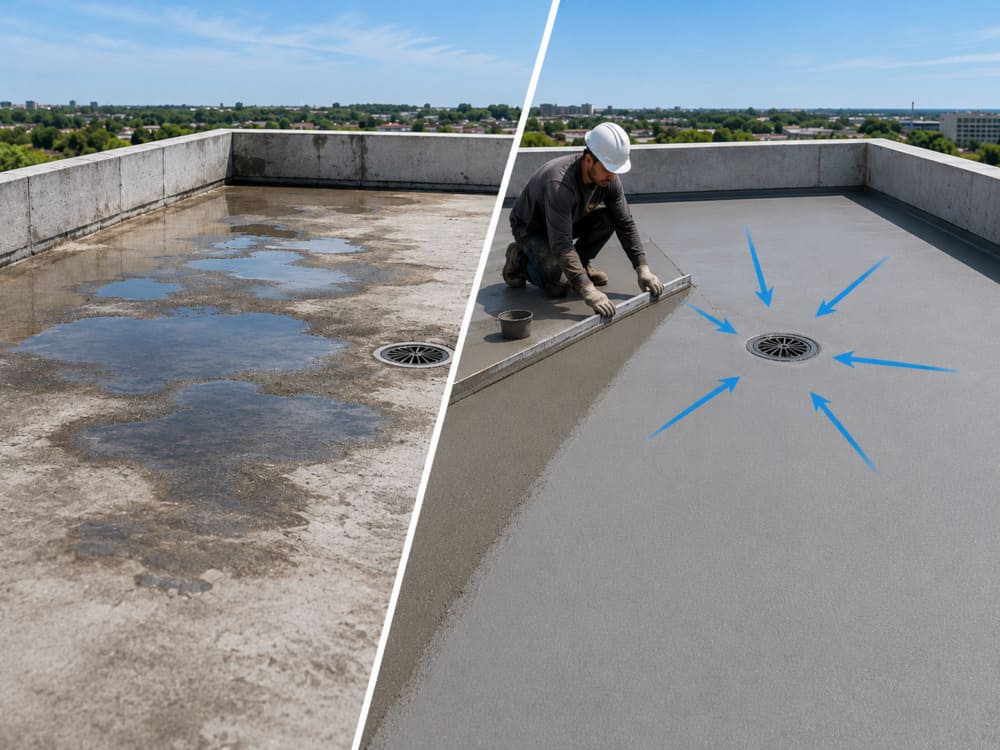
Roof leveling is the process of applying a leveling screed or compound to an existing roof slab to correct low spots, create a consistent gradient, and eliminate areas where water pools. The target slope for flat roofs is typically between 1:80 and 1:40, enough to guide rainwater toward drainage points without creating visible inclines.
In Malaysia, flat concrete roofs are particularly prone to settling and surface irregularities over time. Tropical downpours deliver large volumes of water rapidly, and even a modest low spot can cause significant ponding within minutes. Left unaddressed, this leads to:
- Membrane blistering and delamination from prolonged moisture exposure
- Increased slab weight that stresses the underlying structure
- Algae and moss growth that further traps moisture
- Water infiltration into the slab, causing concrete carbonation and rebar corrosion
Roof leveling addresses the root cause rather than masking it with successive layers of sealant.
Contact TopGuard today to inspect your roof slab and find the right waterproofing solution before ponding water leads to costly leakage.
Why Roof Leveling Is Critical for Malaysian Properties
Malaysia’s average annual rainfall exceeds 2,500mm in many parts of KL and Selangor. Flat roof concrete slabs in terrace houses, shop lots, and industrial buildings are subjected to intense rain events multiple times a week throughout the year.
A slope deficiency of just a few millimeters across a large roof surface can result in hundreds of liters of standing water after a single downpour.
The heat-cool cycling in the tropics causes concrete to expand and contract repeatedly. Over time, this leads to micro-settling and changes in surface levels that were not present when the building was first constructed. Older properties in areas such as Shah Alam, Cheras, and Petaling Jaya are especially vulnerable.
TopGuard’s roof refurbishment services with change of roof tiles and roof leaking repair include a full condition assessment covering slope, drainage adequacy, and slab integrity before any waterproofing work begins.
4 Common Signs Your Roof Slab Needs Leveling
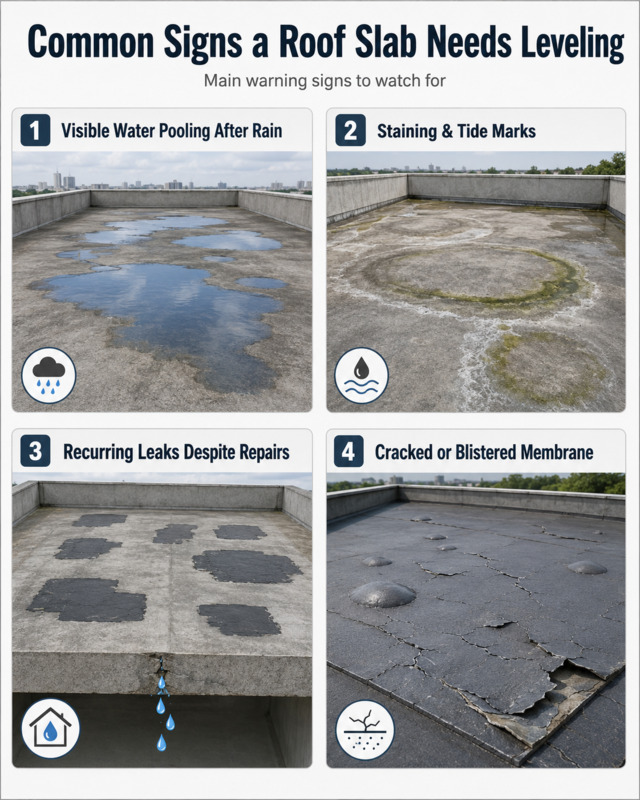
These signs suggest that an uneven slab is the underlying problem:
1. Visible Water Pooling After Rain
Puddles that remain on the roof surface more than 48 hours after rainfall indicate inadequate drainage slope. Even shallow pooling in multiple locations across the roof is a clear indicator of surface unevenness.
2. Staining and Tide Marks on the Roof Surface
Mineral deposits, algae outlines, or discoloration in ring patterns show where water consistently sits. These tide marks map the low points on your slab accurately.
3. Recurring Leaks Despite Waterproofing Repairs
Repeated waterproofing applications that fail within a short period often indicate that the membrane is being stressed by trapped water rather than physical damage. The slab gradient was never corrected, so the new membrane faces the same conditions as the old one.
4. Cracked or Blistered Membrane
A waterproofing membrane that blisters, cracks, or separates prematurely is frequently suffering from hydrostatic pressure caused by ponding. Leveling the slab before the next membrane application eliminates this pressure.
Get TopGuard’s team to assess your roof ponding issue and recommend a waterproofing solution suited to your roof condition.
How to Identify a Roof Slab Ponding Water Problem
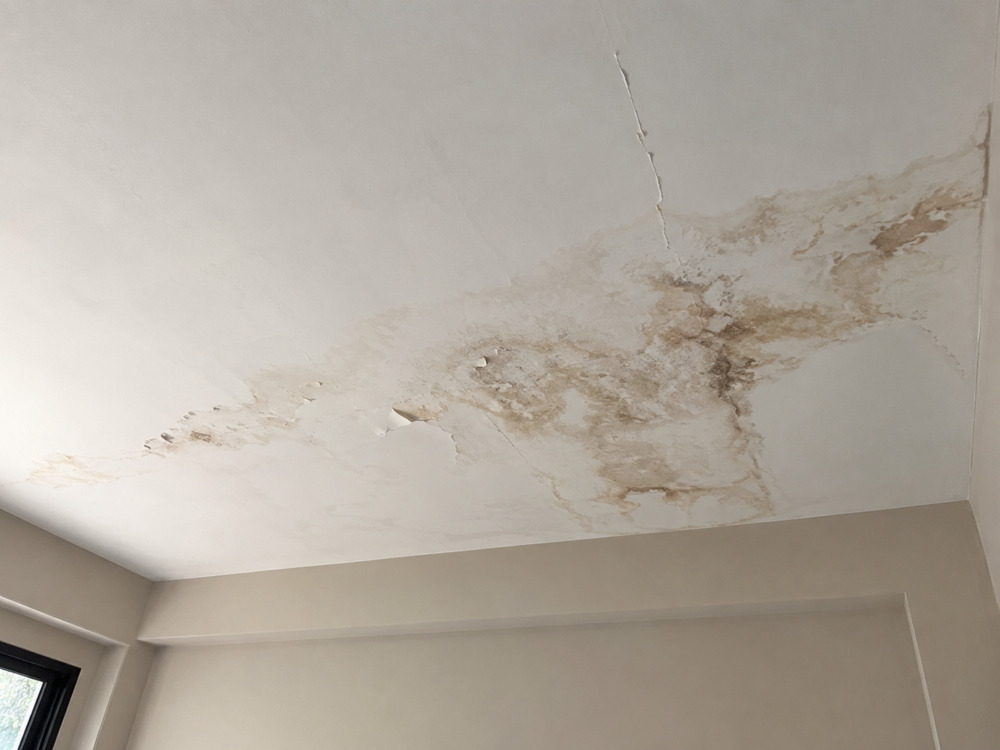
Water that clears within 24 to 48 hours after rain stops is generally acceptable drainage behaviour. Persistent standing water beyond that window signals a ponding problem.
- Visible water sitting in the same area after every rain event
- Staining, efflorescence, or tide marks on the roof surface indicating repeated water accumulation
- Water leakage or damp patches appearing on the ceiling directly below the roof slab
- Cracked, blistered, or delaminating waterproofing membrane on the roof surface
- Blocked drain outlets with visible debris or plant growth
Learn more about how we put waterproofing solutions for roof leaks after heavy rain and how much to repair the roof.
How to Level Roof Properly: TopGuard’s Roof Leveling Approach
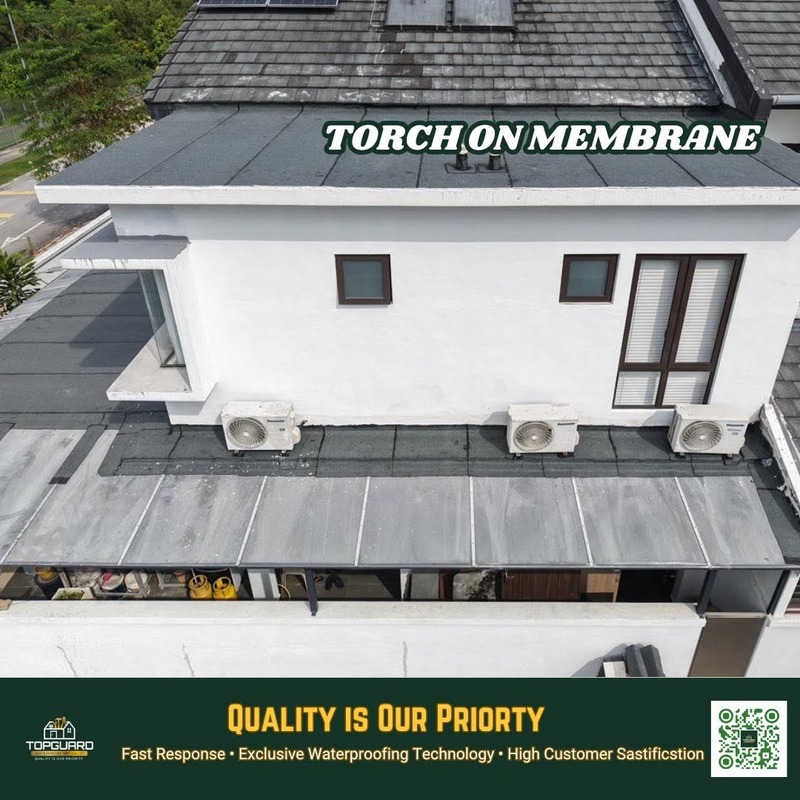
TopGuard waterproofing specialist in Selangor start by checking the roof slab condition, drainage direction, existing membrane, and ponding pattern to make sure the corrected gradient solves the cause of water retention.
1. Roof Inspection and Ponding Assessment
TopGuard inspects the roof slab to identify low points, standing water areas, cracks, damaged screed, drain positions, and existing waterproofing defects. This helps determine whether the ponding is caused by poor slope, uneven slab settlement, blocked drainage, or failed previous repair work.
2. Drainage Direction and Level Planning
Our team maps the intended water flow direction toward the nearest drainage outlets. The roof is not leveled blindly; TopGuard plans the required gradient so rainwater can move naturally to the drains instead of collecting in weak areas of the slab.
3. Surface Preparation for Strong Adhesion
Loose screed, weak cement layers, dirt, algae, and debonded waterproofing materials are removed to create a clean and stable substrate. This preparation allows the new leveling layer to bond firmly and reduces the risk of hollow areas, cracking, or early failure.
4. Roof Leveling Screed Application
TopGuard applies the leveling screed in controlled thickness based on the roof’s low and high points. Depressed areas receive thicker application, while higher areas are treated with thinner layers to create a smooth, consistent fall toward the drainage outlets without adding unnecessary load to the roof.
5. Slope Checking and Water Flow Testing
Once the leveling layer has cured, TopGuard checks the surface fall using proper site tools and water flow testing. This step confirms that water moves toward the drains and does not remain trapped in the same ponding areas after rain.
6. Waterproofing System Application
After the slab is properly leveled and dry, TopGuard applies the waterproofing system over a corrected roof gradient. This helps the membrane bond evenly, perform more consistently, and last longer because it is no longer exposed to constant ponding stress.
Options include cementitious waterproofing, crystalline waterproofing, and torch on membrane waterproofing systems for stronger long-term protection in Malaysia’s hot and rainy climate.
This helps the repaired roof slab drain water more effectively while protecting the concrete surface against moisture penetration.
See the difference between waterproof roof coating and roof repair before deciding on solutions for your roof to last in the long run.
7. Roof Refurbishment for Severe Ponding Problems
For roofs affected by repeated ponding, damaged membranes, cracks, or ageing waterproofing layers, minor repair work may no longer be enough.
Case Study: Roof Slab Leveling and Torch-On Membrane Work for Double Storey House in Ampang
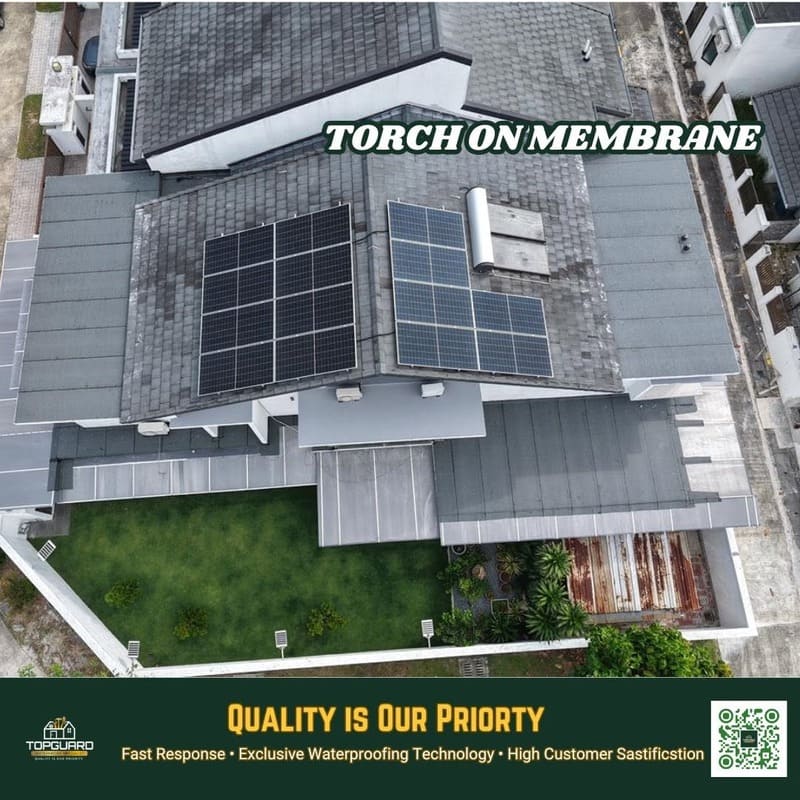
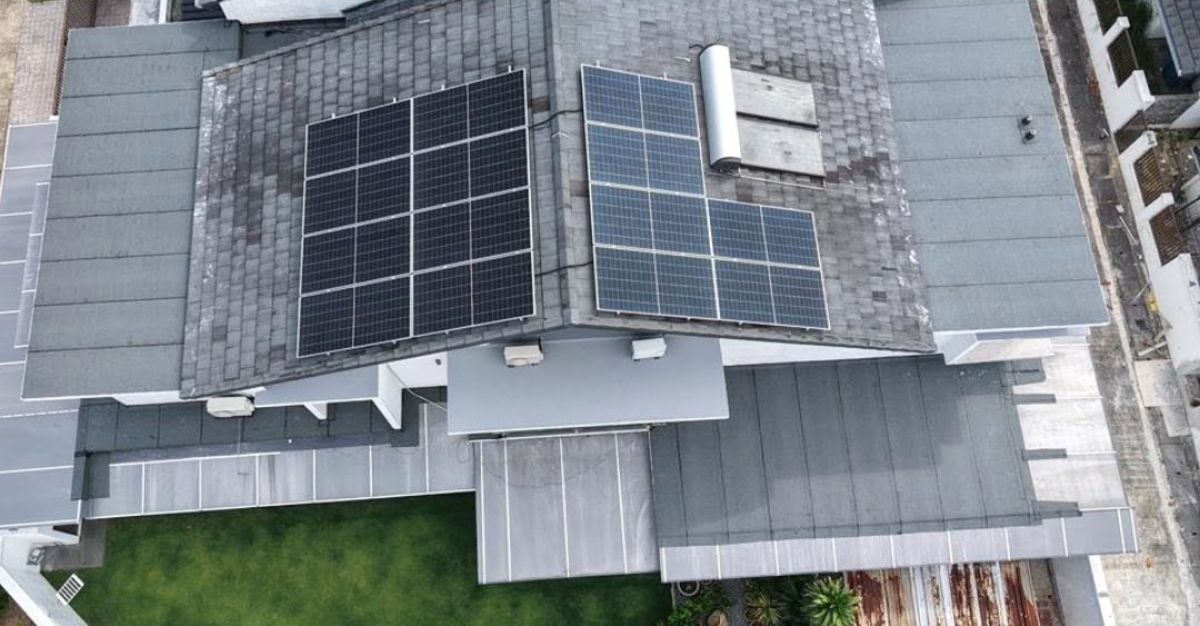
A double storey house in Ampang had water ponding concerns on an exposed roof slab near the solar panel and roof tile areas. The surface showed signs of uneven levels, worn sections, and low points where rainwater could collect after heavy rain.
This project required more than a standard waterproofing application. TopGuard first needed to assess and level the roof slab properly so the treated surface could support better water runoff before the torch-on membrane work continued.
Key issues spotted on-site included:
- Uneven roof slab surface near the solar panel area
- Low spots where rainwater could collect
- Worn exposed concrete sections
- Water ponding risk near roof tiles and open access points
- Weak areas around slab edges, joints, outlets, and wall connections
- Existing fittings that required careful work around the affected area
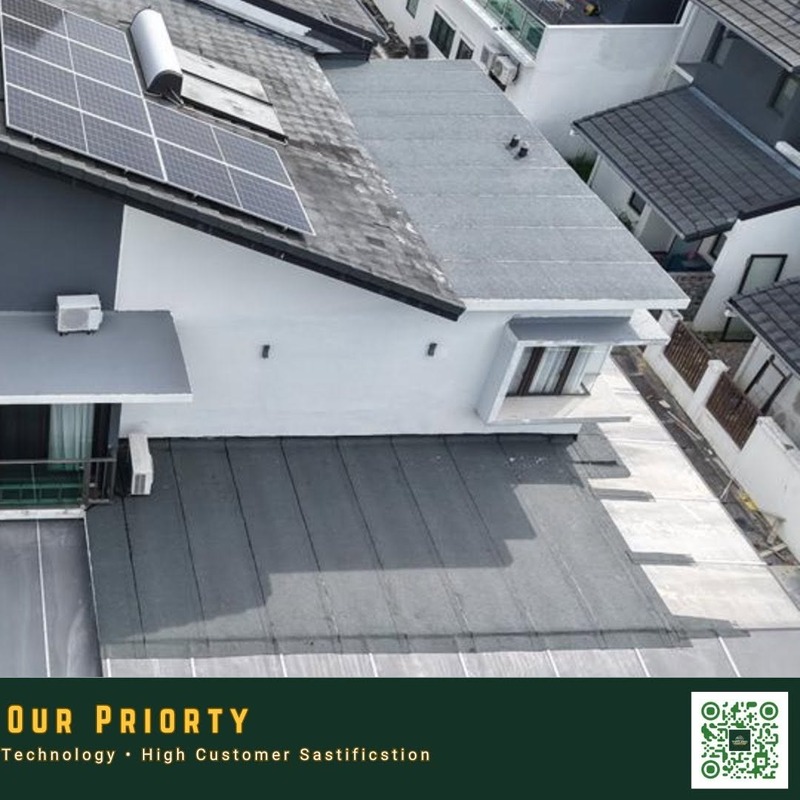
TopGuard inspected the exposed roof slab to understand the water flow direction and identify areas that needed leveling. The team checked the slab condition, nearby roof tile area, solar panel surroundings, access points, joints, outlets, and wall connections that were more prone to water seepage.
TopGuard’s roof slab leveling and waterproofing solution included:
- Preparing the exposed roof surface for treatment
- Checking the water flow direction across the flat slab area
- Treating uneven sections to improve the roof surface fall
- Reducing low spots where rainwater could collect
- Working carefully around the solar panel, roof tiles, and open access points
- Checking slab edges, joints, outlets, and wall connection points
- Installing torch-on membrane across the treated roof slab area
- Creating a stronger waterproofing layer over the corrected surface
This project shows why roof slab leveling is important when ponding appears near rooftop fittings or roof tile areas. If the slab surface remains uneven, rainwater can continue collecting and place pressure on weak points around the roof structure.
By improving the roof surface fall and applying torch-on membrane over the treated area, TopGuard helped the homeowner achieve a cleaner slab surface, better runoff support, and improved leak control protection for the exposed roof area.
Fix Ponding with Roof Leveling Before It Turns Into Costly Leakage
Ponding water is one of the most reliable indicators that a flat roof slab needs leveling before waterproofing is considered. Applying a membrane over an insufficiently sloped surface delays the problem without solving it, and the repeat costs add up quickly.
Getting the gradient right the first time is what allows a waterproofing system to perform across years rather than months.
TopGuard has been delivering integrated roof leveling and waterproofing solutions to homeowners and businesses across KL and Selangor for over a decade.
Contact TopGuard today to arrange a roof inspection and get a suitable waterproofing solution before ponding water causes bigger repair costs.
Frequently Asked Questions About Roof Slab Ponding
1. How long can water stay on a roof before it becomes a problem?
Water that remains on a roof slab for more than 48 hours after rain may indicate ponding, and TopGuard can inspect the area before it leads to leakage or waterproofing failure.
2. Can TopGuard fix roof slab ponding without replacing the entire waterproofing system?
Yes, TopGuard checks the root cause first and may recommend drain clearing, crack repair, re-screeding, localised waterproofing, or full refurbishment based on the roof condition.
3. What waterproofing solution does TopGuard use for roof slab ponding?
TopGuard selects the system based on site condition, which may include cementitious waterproofing, crystalline waterproofing, torch-applied membrane, or a full roof refurbishment for severe cases.
4. Does roof slab ponding always need re-screeding?
No, TopGuard only recommends re-screeding when poor roof gradient causes water to collect, while drainage path issues or minor defects may need a different repair approach.
5. How do I know if roof ponding has caused water leakage?
Ceiling stains, damp patches, peeling paint, musty smell, or water marks below the roof slab are signs that TopGuard should inspect for leakage and waterproofing damage.

Your Trusted Waterproofing Specialist in Malaysia
Mason is an experienced waterproofing contractor in Malaysia, serving Kuala Lumpur, Petaling Jaya, Selangor and nearby areas. With 10 years of experience in roofing repair and waterproofing, he works on leak repairs, waterproof coatings and practical solutions for homes and businesses.
His work focuses on helping property owners protect their buildings against water damage and reduce future repair issues. He also shares waterproofing tips with clients so they can better understand maintenance, early warning signs and prevention steps.
Mason believes every property should have a safe, durable and well-protected structure. When you work with Mason, you are working with a specialist who values quality workmanship and long-term results.